
DOCUMENTS / CARE PROTOCOL
Fursuit Cleaning Guide
Choose the suit part first, then follow the matching wash and drying method.
MAX 40°C / 104°F
NO BLEACH
NO IRON
01 / PART ROUTING
Choose the wash method
Match each part to its approved method before disassembly or washing.
Before washing the head, remove eye modules, internal fans, and every other non-waterproof electronic component.
Bodysuit
MACHINE WASH
Body padding
MACHINE WASH
Hand paws
MACHINE WASH
Feet paws
HAND WASH ONLY
Tail
MACHINE WASH02 / CARE SYMBOLS
Read the symbols
These care marks summarize the temperature, drying, and prohibited treatments used throughout this guide.
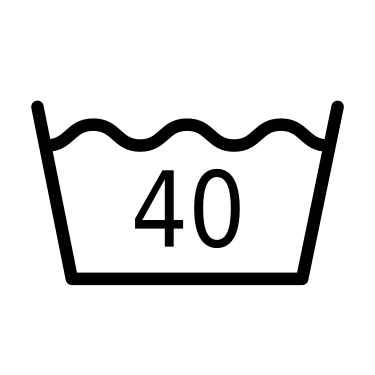
Wash at or below 40°C
Use cool or warm water. Never use hot water.
Hand wash only
Clean gently with diluted detergent and a soft brush.

Line dry
Hang with the fur facing downward and allow air to circulate.

Do not bleach
Bleach can damage colored fur and materials.

Do not tumble dry hand-wash parts
Heads and feet paws must air dry.

Do not iron
Do not iron any part of the suit.
Care symbols sourced from Wikimedia Commons. License details
03 / MACHINE WASHING
Machine washing
For the bodysuit, body padding, hand paws, and tail.
Prepare the shape
Insert the padding and stuffing into the bodysuit and tail before washing so the parts keep their shape.
Bag and wash
Place washable parts in a laundry bag. Fabric softener or disinfectant may be added. Keep water at or below 40°C / 104°F.
Dry cool
Line dry with the fur facing downward. If a dryer is used for machine-wash parts, stay at or below 40°C; 30–35°C / 86–95°F is recommended.
04 / MANUAL WASHING
Manual washing
For the head and feet paws. Never put these parts in a tumble dryer.
Remove electronics
Take out eye modules, internal fans, and every other non-waterproof component before the head touches water.
Mix detergent
Prepare cool cleaning solution using one of the dosage ranges below.
Brush and rinse
Pour on the solution and clean gently with a soft brush. Rinse until all foam and detergent are gone.
Air dry
Allow the part to air dry completely. If necessary, use a hair dryer only on a low-temperature setting.
Liquid detergent10–20 ml per liter / 0.3–0.6 fl oz per quart
Powder detergent6–12 g per liter / 0.2–0.4 oz per quart